
Why Modular Construction Is Reshaping the Building Industry

Modular construction is gaining serious momentum in the construction industry, and for good reasons. With an increasing demand for faster, more sustainable, and cost-effective building methods, it offers a compelling alternative to traditional techniques. 

This article explores what modular construction is all about and why it is reshaping the construction industry.

What is Modular Construction?

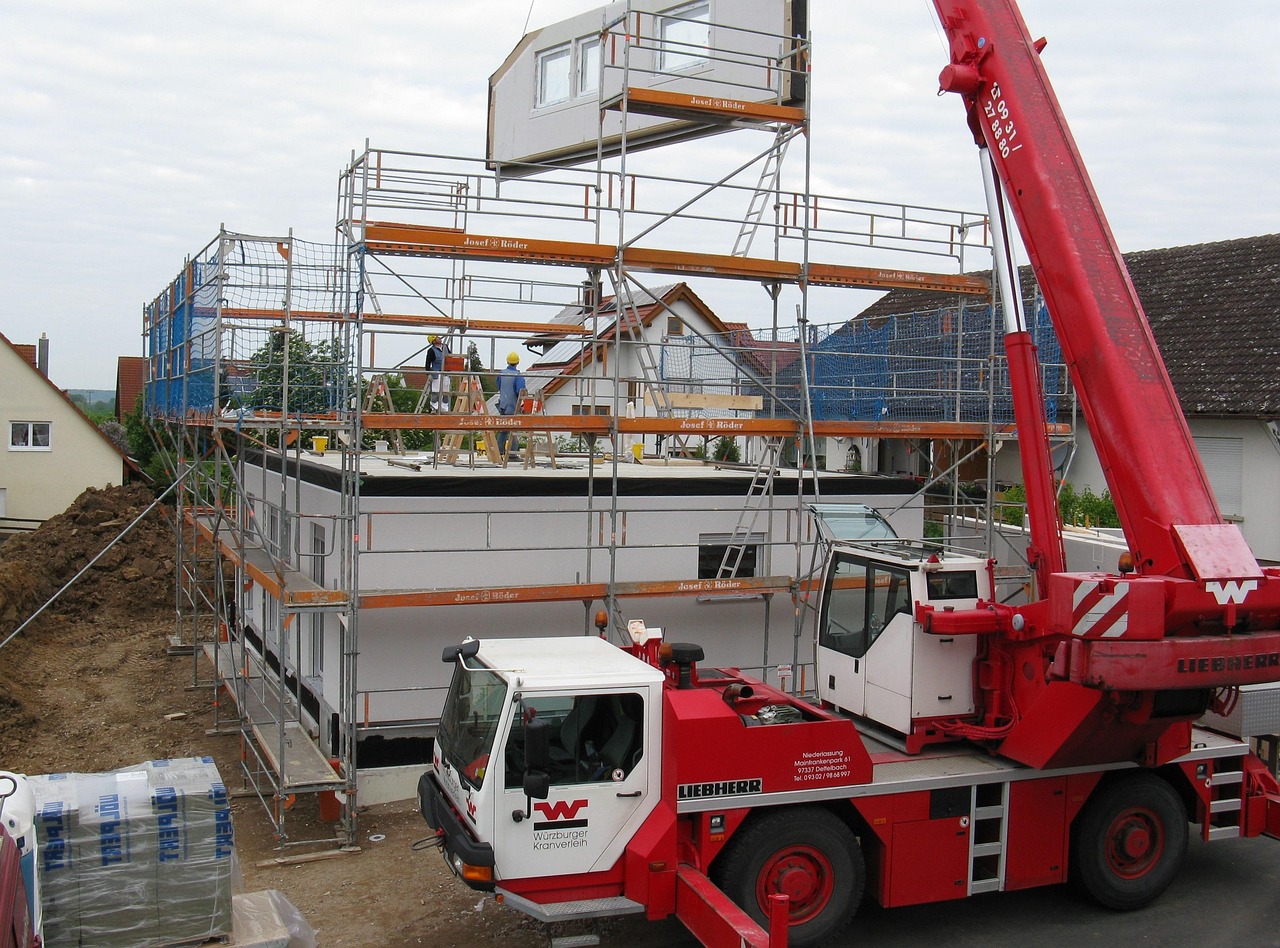
Modular construction, also known as modular building, is a form of prefabricated construction. Here, structures are built in individual sections called “modules”, and this is done off-site, under controlled factory conditions. The modules are then transported to the construction site and assembled into a complete building. 

Usually, each module is constructed using the same materials used in traditional construction. They are also done in line with the same codes and standards as conventional buildings, ensuring structural integrity, durability, and compliance with local regulations.

However, unlike conventional building, which happens entirely on-site and is often subject to delays due to weather or labor shortages, modular building is faster, safer, and allows for more efficient project delivery.

Modular Construction vs Traditional Construction

While both methods have their place in the building industry, we will need to consider their differing attributes. Therefore, here are the differences between traditional and modular construction:

Construction Site: Usually, structures built using modular construction are built off-site in a factory, then assembled on-site. In traditional construction, however, you build the entire structure on-site from the ground up.

Timeline: Because site work and module fabrication happen simultaneously in modular building, the process is usually faster, whereas it is slower when building traditionally because of the sequential construction process required.

Quality Control: Due to factory conditions and the fact that the quality of the materials used is more likely to be properly checked in modular building, there is a high consistency in the quality of the structures. However, in conventional construction, quality may vary depending on site conditions and labor.

Labour: Modular construction typically requires fewer on-site workers since it is done in an enclosed factory environment. Meanwhile, traditional construction is labor-intensive, usually requiring a full crew on-site.

Waste Management: Because modules are built in a controlled factory setting, there is usually less material waste since leftover materials can easily be reused and properly disposed of. In contrast, there is usually higher material waste from cutting and overordering in traditional construction. The leftover materials are also more prone to improper discarding since they are usually just left on-site until construction is completed, and sometimes, they end up buried in the soil.

Flexibility: Modular structures are usually easy to expand or relocate since they are made using individual modules, but traditionally built structures are usually permanent and can’t be relocated. Expanding them also requires a lot of money and strenuous work.

Clearly, modular construction offers a more forward-looking solution that meets the increasing demands for speed, sustainability, and cost-efficiency.

Where Modular Construction is Used

Modular construction is incredibly versatile and is used across a wide range of sectors, including:

  • Residential Housing: E.g., single-family homes, apartment complexes, affordable housing, and so on.
  • Commercial Buildings: E.g., offices, retail stores, hotels, etc.
  • Healthcare: E.g., clinics, hospitals, emergency response units, etc.
  • Education: E.g., classrooms, dormitories, training centers, etc.
  • Industrial: E.g., site offices, warehouses, control rooms, etc.
  • Public Sector: E.g., military housing, prisons, government facilities, and so on.

Moreover, with its adaptability and efficiency, it is especially popular in areas where speed, cost control, or environmental concerns are top priorities.

Benefits of Modular Construction 

1. Speedy Construction

One of the biggest advantages of modular building is speed. This construction method significantly reduces build times by allowing site preparation and module fabrication to happen at the same time. This parallel workflow helps complete projects 30–50% faster than conventional builds, making it ideal for time-sensitive developments like schools, hospitals, or housing.

2. Cost Efficiency

With reduced labor costs, less material waste, and shorter timelines, this construction method often results in more predictable and often lower total costs. It also minimizes expenses related to project delays and on-site inefficiencies since factory-based production helps prevent weather interruptions or subcontractor scheduling issues, which are common in traditional construction.

3. Improved Safety

Construction sites are among the most hazardous workplaces. Modular building, however, reduces on-site labor, which in turn lowers the risk of accidents and injuries. In addition, factory settings offer safer, ergonomically designed workspaces with strict adherence to health and safety regulations, reducing exposure to dangerous conditions for workers and nearby residents.

4. Sustainability and Waste Reduction

Sustainability is a core advantage of this method of construction. This is because factories can optimize material use with precision, reducing waste by up to 80compared to traditional methods. Many modular projects also incorporate recycled or eco-friendly materials and use energy-efficient systems, making them very suitable for the environment.

5. Design Flexibility and Scalability

Contrary to popular belief, modular construction isn’t limited to cookie-cutter designs. It allows for a wide range of customization, from floor plans and finishes to architectural styles. Additionally, one can easily expand, disassemble, or relocate modular buildings.

Conclusion 

In summary, modular construction isn't just a trend; it's a strategic, innovative solution to the evolving demands of the construction industry. With faster timelines, improved quality, and a significantly reduced environmental footprint, it's no wonder more developers, engineers, and architects are steadily making the switch.

Whether you’re building affordable housing or luxury high-rises, Redcity offers modular construction services that will get your project done faster, safer, and more sustainably. To join in on the trend, simply request a quote here and discover how we can get you started. If you would also like to check out our other construction services, visit here. While you’re at it, also visit our blog and YouTube channel for more insightful news and content like this.

Would you consider using this ingenious method of construction? Let us know your thoughts in the comments.

Smart Modular Pods: The Future of High-Tech Spaces

In today’s fast-paced, tech-driven world, businesses are constantly looking for ways to operate more efficiently, adapt to customer needs, and stay competitive. One innovation that is revolutionizing how organizations deliver services and interact with people is smart pods.

Compact, self-contained, and digitally equipped, smart pods are quickly becoming a go-to solution across sectors like housing, healthcare, banking, retail, and public services. Whether placed indoors or outdoors, they offer a futuristic approach to service delivery and workspace flexibility.

This article explores the concept of smart pods, their fundamental features, benefits, and uses.

What Are Smart Pods?

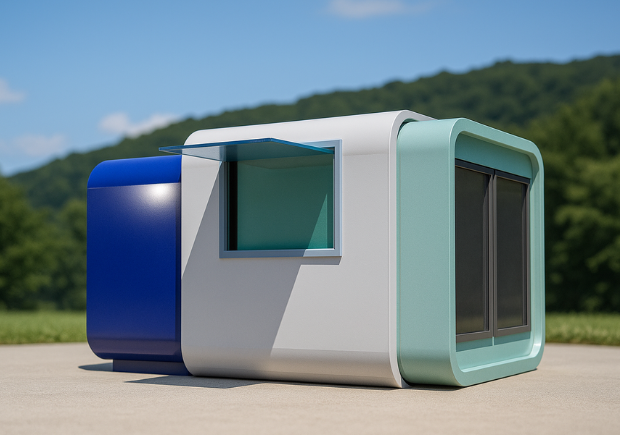
Smart pods are modular, prefabricated structures embedded with technological and automated features. Designed for specific functions, they can operate as homes, private consultation rooms, mini offices, kiosks, or customer service centers.

Unlike traditional booths or temporary setups, smart pods come equipped with smart infrastructure, such as climate control, AI-powered interfaces, security systems, and real-time connectivity, making them self-sufficient, interactive, and highly efficient.

Think of them as intelligent, plug-and-play spaces that can be quickly deployed wherever needed.

Features of a Smart Pod

Smart pods vary in design and purpose, but they typically include:

Touchscreen Interfaces: For self-service interactions and also guided support.

High-Speed Connectivity: Built-in Wi-Fi or cellular network support for real-time communication and data transfer.

AI Integration: AI software for user interaction as well as any required guidance.

Biometric Authentication: Fingerprint or facial recognition for secure access or identity verification.

Climate Control Systems: Air conditioning and ventilation that adapt to occupancy and use.

Surveillance & Security: CCTV, motion sensors, and access control to ensure safety.

Energy Efficiency: Solar panels, LED lighting, and low-energy systems for sustainable operation.

Portability: Easy to move, relocate, or redeploy with minimal disruption.

Benefits of Smart Pods

Smart pods offer several key advantages:

Speed of Deployment: They are prefab structures that can be installed in days rather than weeks or months.

Cost-Effective: They also reduce the need for expensive infrastructure or building renovations.

Privacy & Security: They are enclosed spaces with secure access, making them ideal for confidential services.

Scalability: It is also easy to expand services by adding more pods as needed.

Reduced Footprint: Their compact size allows for use in small or temporary locations. This is why they are useful for a wide variety of services.

24/7 Accessibility: They usually operate autonomously or remotely, thus enabling round-the-clock service.

Improved Customer Experience: Because of their ease of use and accessibility, they ensure shorter wait times, streamlined service, and modern interfaces that enhance satisfaction.

Where Can Smart Pods Be Used?

Smart pods are highly versatile and can be used in a variety of environments, both indoor and outdoor:

Healthcare: 

  • Telemedicine booths for remote consultations.
  • Testing & screening pods (e.g., COVID-19 or diagnostics).
  • Mobile clinics in rural or underserved areas.

Retail:

  • Self-service kiosks for order placement or returns.
  • Click-and-collect pods for pickup of online orders.
  • Product showcases for tech demos or brand activations.

Banking & Finance:

  • Automated Banking Units with video banking or ATM functions.
  • Loan application pods for secure document submission and ID verification.
  • Insurance service stations for policy updates or claims processing.

Public Services:

  • e-Government Booths for document renewals, permit applications, etc.
  • Voter Registration Units in remote or high-traffic areas.
  • Education pods for virtual learning or exam-taking in remote locations.

Corporate Use:

  • Soundproof meeting rooms in open office layouts.
  • Remote work pods for mobile employees in airports, malls, or coworking hubs.
Conclusion

In summary, the growing demand for fast, secure, and tech-enhanced services makes smart pods a smart investment for forward-thinking organizations. These compact, connected units bridge the gap between digital services and real-world access, bringing convenience, privacy, and speed directly to the people who need it most.

Therefore, they offer businesses a unique combination of ease, innovation, and practicality. Thus reducing operational costs, improving customer engagement, and allowing for rapid responses to market changes.

This is why building smart pods is one of the many construction services Redcity offers. To construct the perfect smart pod for your business, simply request a quote here to get started. While you’re at it, you can check out our other products and services here. Also, visit our blog and YouTube channel for more insightful news and content.


The Satisfying Growth of Prefabricated Construction in Africa

As the world continues to demand fast, affordable, and sustainable building solutions, prefabricated construction emerges as a revolutionizing solution. Its low cost and easy-to-assemble nature make it a practical alternative to traditional building methods.

In many parts of the world, like in Africa, for instance, prefabricated construction offers a timely solution to housing shortages, infrastructure development, and urbanization challenges. Because of this, it's fast becoming a popular choice in the construction world, with its market estimated to be worth more than $150 billion by 2026.

This article explores what prefabricated construction is, what it’s used for, its benefits and drawbacks, and how it is steadily impacting Africa.

What is prefabricated construction?

Prefabricated construction, commonly called prefab, is a building process where components of a building are manufactured off-site, usually in a factory, and are afterwards transported to the main construction site for assembly. In other words, it involves transporting pre-made or prefabricated components of a structure from where they are separately made to the construction site where they would be assembled together to form a complete structure.

Unlike traditional building methods that require long, on-site construction timelines, prefab shifts much of the work off-site, allowing for faster and often more efficient project completion.

The process can be done in two ways. Either fully modular, i.e., constructed entirely off-site and assembled on-site like building blocks, or partially prefabricated, where only certain components like walls, floors, or roofs are pre-made.

https://youtube.com/shorts/4f1dOUx-d0o?si=UDTj9xhjwtHpnaN5
What is Prefabricated Construction Used For?

Usually done using common construction materials such as steel, concrete, and wood, as well as sustainable materials like shipping containers, prefab is used for creating a wide range of structures, including:

Residential Buildings: Such as single-family homes, apartment blocks, and even luxury villas.

Commercial Spaces: Such as office buildings, retail centers, and warehouses.

Healthcare Facilities: Such as hospitals, clinics, and mobile medical units.

Educational Institutions: Such as schools, classrooms, and dormitories.

Emergency Relief Housing: Quick shelter solutions during natural disasters or humanitarian crises.

Benefits of Prefabricated Construction

Prefabricated construction brings with it a number of advantages that are worth mentioning. They include:

Speed: Doing much of the work off-site significantly reduces construction timelines. In addition, because prefabricated structures are easier to assemble and disassemble where necessary, it becomes possible to complete projects faster, making prefab especially crucial in emergency situations where shelters or decent housing may be exigent.

Cost-Effective: Prefab, due to the fact that it's usually done in a factory setting, requires less labor in comparison to traditional building. In addition to this, the materials used are usually bought in bulk and so cost less. Furthermore, prefab structures are also energy-efficient, durable, and easy to maintain, which further helps to save costs.

Quality Control: Factory production typically ensures consistent quality. In other words, with prefab, the quality of the materials used to manufacture the components is checked and approved before they are used. This way, safety codes are adhered to, ensuring quality and safe construction.

Sustainability: Prefab usually integrates eco-friendly designs and materials, making it favorable to the environment. Moreover, because it is done in a controlled environment, it reduces material waste, thereby helping to protect the environment from pollution.

Flexibility: Prefabricated structures can be customized for various uses and environments. Their design allows them to be tailored to diverse needs, climates, and design preferences. As such, prefabricated construction is suitable for building almost any structure.

Disadvantages of Prefabricated Construction

Notwithstanding its upsides, prefab also comes with a few considerable setbacks, which are:

Transportation Costs: Usually, it is expensive to transport large components. It requires thorough planning and supervision, making it rather difficult to move manufactured components to the main construction site for assembly.

Limited Design Flexibility On-Site: Major changes are hard to make after manufacturing. As a result, where there are defects or the need for adjustments, it may be difficult to achieve such. Also, prefab is usually design-specific, and as such, it places constraints on the types of structural designs possible.

Infrastructure Needs: Due to the manner in which prefab is carried out, it usually requires proper roads and cranes for assembly in remote areas. This may prove difficult, especially where these infrastructures are not present or available.

The Cost of Prefabricated Construction

Prefab construction is often cheaper than traditional building, with cost savings of up to 15-20% in some cases. The cost, however, varies based on factors such as:

  • Type of structure
  • Materials used
  • Transportation logistics
  • Labor and site preparation
  • Local regulations and taxes

Nevertheless, in Africa, prefab homes can cost as little as $5,000 to $30,000, depending on size and finishes, making them a more viable option for low- and middle-income families.

Prefabricated Construction in Africa

With millions lacking access to decent shelter and urbanization steadily accelerating in Africa, it is evident that traditional construction methods cannot keep up with the increasing demand. As a result, prefab emerges as a game-changer, helping to alleviate the prevalent housing shortage plaguing the continent. This is why across various African nations, this construction method is increasingly gaining traction.

According to statistics, the market’s CAGR is estimated to be greater than 5.5% by 2030. In Nigeria, the market is growing 10.1% annually, and 6.1% annually in South Africa. Other African countries like Egypt and Kenya are also seeing significant growth in prefabricated construction. Moreover, adding to its growth are international organizations, NGOs, and private developers who invest in prefab solutions to support infrastructure goals across the continent.

View this post on Instagram

A post shared by Redcity Company (@redcityco)

Clearly, prefabricated construction is becoming a preferred solution in Africa, and it might just be what the continent needs. Here’s why:

Affordable Housing: Prefab homes are usually more affordable. As such, they make it possible for low-income earners to also become homeowners.

Speedy Construction: As a fast method of construction, it is a perfect approach to adopt in disaster-prone areas or refugee zones.

Job Creation: Prefab stimulates local economies by creating manufacturing and assembly jobs.

Sustainable Development: It reduces environmental impact, especially in regions with limited resources.

Educational & Medical Infrastructure: Prefab helps build schools and hospitals quickly and easily in underserved areas.

Conclusion

In summary, prefabricated construction offers a much-needed solution to the pressing challenges of housing and infrastructure, especially in Africa. With its cost-efficiency, speed, and adaptability, prefab is poised to play a pivotal role in Africa’s developmental journey. In essence, while not without its challenges, its benefits far outweigh the drawbacks, making it an essential part of the future of construction, not just in Africa, but worldwide.

Redcity, like many companies adopting this innovative approach to construction, offers expert prefab services both locally and internationally. Simply request a quote here to get started. While you’re at it, you can check out our other products and services here. Also, visit our blog and YouTube channel for more insightful news and content.

What are your thoughts on prefabricated construction in Africa? Do you think it’s the future of construction in Africa? Let us know below.

 
Redcity