7 “Wakanda-Like” Cities in Africa

7 “Wakanda-Like” Cities in Africa: How Technology, Design and Infrastructure Are Shaping Tomorrow

What if Wakanda wasn’t entirely fictional? Across Africa, cities are quietly turning futuristic ideas into reality using technology, bold architecture, smart infrastructure, and sustainable solutions to address the challenges of tomorrow.

The “Wakanda-like” city is not simply about towering skyscrapers or advanced technology. It represents an Africa that is innovative, self-reliant, and capable of creating solutions for its own future. Here are seven African cities showing what that future could look like.

1. Kigali, Rwanda

Known for its cleanliness, organized planning, and growing digital infrastructure, Kigali demonstrates how technology and environmental responsibility can work together.

2. Nairobi, Kenya

Africa’s technology hub continues to transform transportation, finance, agriculture and commerce through digital innovation and smart solutions.

3. Lagos, Nigeria

As one of Africa’s largest and fastest-growing cities, Lagos is investing in transportation, technology, real estate, and infrastructure. Its rapid growth also highlights the urgent need for better environmental management.

4. Windhoek, Namibia

Windhoek stands out for its approach to sustainable urban development, particularly in water management and resource efficiency. In a naturally dry environment, the city demonstrates why future African cities must be designed around resilience and responsible resource use.

5. Cape Town, South Africa

Cape Town’s experience with water challenges shows why future cities must be designed for resilience, sustainability and changing environmental conditions.

6. Egypt’s New Administrative Capital

This ambitious development combines large-scale infrastructure, modern architecture, and technology to create a city designed with the future in mind.

7. Addis Ababa, Ethiopia

With expanding transportation networks, digital services and infrastructure development, Addis Ababa is steadily embracing modern urban solutions.

A futuristic city needs more than smart buildings. It needs a clean environment. As African cities industrialize, challenges such as oil and chemical spills require practical environmental solutions.

Redcity contributes through innovative oil-absorbent products designed to help contain and manage hydrocarbon spills. Let's start talking about the future of infrastructure now.

The future of Africa’s cities should be smart, resilient, and sustainable.  

8 Airbnb Accommodations You Won’t Believe Are Real

8 Airbnb Accommodations You Won’t Believe Are Real

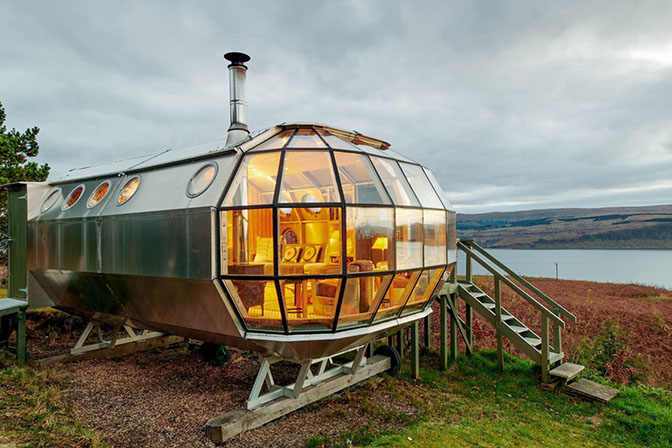
Airbnb has changed how people think about accommodation. Today, travellers can stay in spaces far beyond traditional hotels and houses, from treehouses and shipping containers to aircraft and underground homes.   Here are eight unusual examples showing how creative accommodation has become:

 1. Treehouses  

Treehouses have moved beyond childhood hideouts. The Air Castle Treehouse in Ladonia, Texas, is a two-bedroom stay built from four shipping containers and elevated among the trees, with balconies, a hot tub, and a crow’s nest.

2. Converted Shipping Containers  

Shipping containers can be transformed into comfortable accommodation with the right design. The Lakeside Shipping Container in Rogers, Arkansas, is a compact cabin beside Beaver Lake with a bedroom, kitchen, bathroom, rooftop deck, and hot tub.  

3. Tiny and Unusual Homes  

Small spaces can still offer a complete accommodation experience. The Fallbrook Airplane Home in California incorporates a 1942 Beechcraft aircraft into the property, which serves as a cocktail lounge alongside converted container spaces.  

4. Cabins in Unusual Locations

Some accommodations are designed around their surroundings. The Desert Skybox Container Suites near Joshua Tree, California, use a 45-foot shipping container with elevated bedrooms and private balconies overlooking the desert.  

5. Houseboats  

For some travellers, the accommodation is the experience. Amsterdam Canal Barges in the Netherlands include historic freight ships and traditional narrowboats converted into stylish floating homes along the city's famous canals.  

6. Converted Aircraft  

The Alaska Cargo Planes in Alaska, USA, gives retired aircraft a second life. Decommissioned DC-6 and DC-9 planes have been converted into apartments with kitchenettes, heated floors and even a hot tub on the wings.  

7. Underground Homes  

The Underground Earth Home in Rockbridge, Ohio, is built into the side of a hill on a private 25-acre property. Its design combines the unusual experience of underground living with modern interiors.

 8. The Modular Airbnb  

The next possibility could be a modular Airbnb, a complete accommodation unit with a bedroom, bathroom, kitchen, and living space, built off-site and installed where it is needed.  

As modular homes create more opportunities for unique short-stay experiences, Redcity is helping developers turn these ideas into reality through modular and prefabricated construction.  

Today, it could be a modular Airbnb in a forest, on a farm, or near a tourist destination. Tomorrow, who knows? With the future of modularity, we might even see moon-stay Airbnbs. 

The question may soon change from “Where can we stay?” to “What can we build for people to experience ?”

What do you think about "8 Airbnb Accommodations You Won’t Believe Are Real"? Let's chat about what interesting project we can build for you now.


5 Fatal Mistakes to Avoid when Building with Shipping Containers

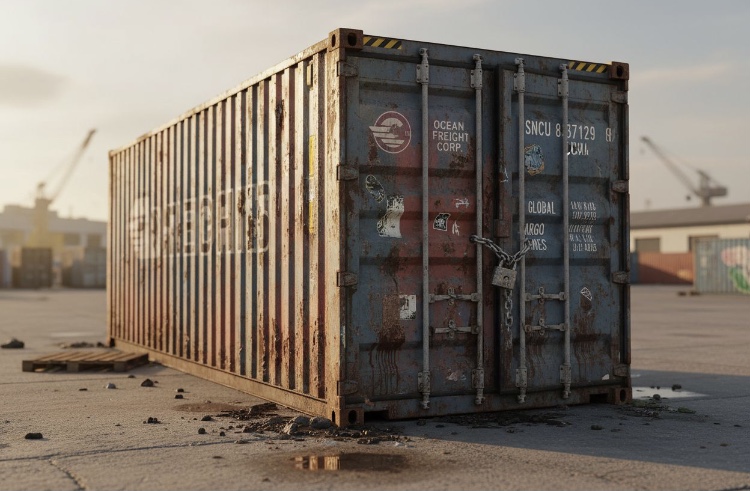
Building with shipping containers remains one of the most popular ways of building sustainably. Used in modular or prefabricated construction, shipping containers are excellent materials for fast-paced construction. Not only are they sturdy, but they are also versatile enough to serve as the framework for any livable structure. However, constructing with them can be disastrous when done incorrectly. To ensure you don’t end up regretting that container space you just built, here are 5 fatal mistakes to avoid when building with shipping containers.

1. Choosing the wrong container:

Not all shipping containers are created equal. They usually come in different sizes with varying heights and lengths. Some exist as regular 20 ft or 40 ft containers, and others as high cube containers of equal lengths, each typically measuring 8 ft wide, and 8 ft 6 in or 9 ft 6 in high, respectively. 

However, one mistake people make without realizing it is buying the wrong size of container. The problem with this is that there are requirements peculiar to each container, based on its size. For instance, ceiling insulations are best suited for high cube containers, whereas the ceiling insulations may compromise the headroom space in regular containers. Therefore, failure to take note of these differences may affect your being able to live comfortably in the structure.

2. Using very old containers: 

Another common mistake people make is buying the cheapest container available without checking its history or condition. Usually, these containers are cheap because they’re very old. Furthermore, in the long run, they usually prove to be way more expensive to use. Not only do they tend to be corroded, dented, deformed, or structurally weak, but they may have also been exposed to toxic materials such as pesticides or chemicals. As a result, you end up incurring more expenses to restore and maintain them.

Where they are not restored or maintained, however, they pose significant health risks and can end up caving in. To avoid this, it is best to purchase your containers from reputable suppliers and conduct thorough in-person inspections before buying. Also, when possible, go for one-trip or certified containers instead.

3. Over-cutting without reinforcement:

Shipping containers are strong because of their steel frame and corrugated walls. Thus, cutting out excess doors or windows from the walls and roof, or combining containers, tends to weaken the structure. In other words, modifying the container is never an issue, but over-modifying it by cutting out more steel than necessary without enough reinforcement can compromise the container’s durability, which can lead to sagging, warping, or even collapse over time.

Therefore, it is usually advisable to reinforce large openings with steel beams or frames where necessary. You can also consult an expert before cutting out large portions of steel from the container. Having a structural engineer review your design will go a long way in preventing a fatal disaster from occurring. Get started by booking a consultation with us.

4. Poor insulation:

Steel is a terrible insulator. Without proper insulation, container buildings can become extremely hot during hot seasons and very cold in freezing weather. In addition to this, rapid fluctuations in the container’s internal temperature as a result of poor insulation cause condensation and dampness that typically lead to a build-up of mold and rust, both of which pose serious health risks. 

To prevent this, use high-quality insulation systems such as spray foam or insulated panels. Also, ensure you design for adequate ventilation and moisture control from the start.

5. Bad foundation planning: 

Containers may look tough, but placing them on an unsteady foundation can be detrimental. To begin with, it causes uneven settling of the structure and can lead to structural stress in the long run. Moreover, a poor foundation can develop cracks and cause water infiltration, which exposes the structure to excess moisture and thereby weakens it.

Thus, simply placing containers on blocks or bare ground is rarely sufficient for permanent structures. Instead, design a foundation appropriate for your soil, climate, and building size. For example, concrete piers, slabs, or strip foundations.

Conclusion

Shipping containers can be an incredible building material when used correctly. However, they demand careful planning and technical knowledge. Avoiding these fatal mistakes can be the difference between a smart, sustainable build and a costly nightmare.

Therefore, before starting your container project, ensure you do your research, work with professionals where needed, and treat container construction with the seriousness it deserves. 

Or better yet, you can enlist the services of experts like Redcity. After many years carrying out various shipping container projects, we know what works best and what doesn’t when building with shipping containers. To get started, you can simply request a quote here

How do you think you can avoid these 5 fatal mistakes when building with shipping containers? Tell us your thoughts below.

Redcity