
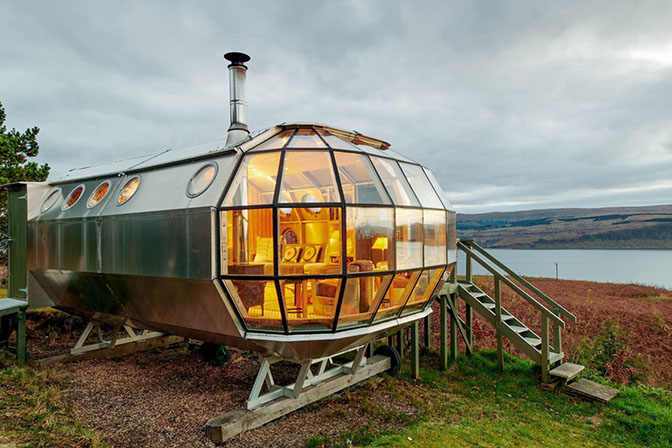
8 Airbnb Accommodations You Won’t Believe Are Real
Airbnb has changed how people think about accommodation. Today, travellers can stay in spaces far beyond traditional hotels and houses, from treehouses and shipping containers to aircraft and underground homes. Here are eight unusual examples showing how creative accommodation has become:
1. Treehouses
Treehouses have moved beyond childhood hideouts. The Air Castle Treehouse in Ladonia, Texas, is a two-bedroom stay built from four shipping containers and elevated among the trees, with balconies, a hot tub, and a crow’s nest.
2. Converted Shipping Containers
Shipping containers can be transformed into comfortable accommodation with the right design. The Lakeside Shipping Container in Rogers, Arkansas, is a compact cabin beside Beaver Lake with a bedroom, kitchen, bathroom, rooftop deck, and hot tub.
3. Tiny and Unusual Homes
Small spaces can still offer a complete accommodation experience. The Fallbrook Airplane Home in California incorporates a 1942 Beechcraft aircraft into the property, which serves as a cocktail lounge alongside converted container spaces.
4. Cabins in Unusual Locations
Some accommodations are designed around their surroundings. The Desert Skybox Container Suites near Joshua Tree, California, use a 45-foot shipping container with elevated bedrooms and private balconies overlooking the desert.
5. Houseboats
For some travellers, the accommodation is the experience. Amsterdam Canal Barges in the Netherlands include historic freight ships and traditional narrowboats converted into stylish floating homes along the city's famous canals.
6. Converted Aircraft
The Alaska Cargo Planes in Alaska, USA, gives retired aircraft a second life. Decommissioned DC-6 and DC-9 planes have been converted into apartments with kitchenettes, heated floors and even a hot tub on the wings.
7. Underground Homes
The Underground Earth Home in Rockbridge, Ohio, is built into the side of a hill on a private 25-acre property. Its design combines the unusual experience of underground living with modern interiors.
8. The Modular Airbnb
The next possibility could be a modular Airbnb, a complete accommodation unit with a bedroom, bathroom, kitchen, and living space, built off-site and installed where it is needed.
As modular homes create more opportunities for unique short-stay experiences, Redcity is helping developers turn these ideas into reality through modular and prefabricated construction.
Today, it could be a modular Airbnb in a forest, on a farm, or near a tourist destination. Tomorrow, who knows? With the future of modularity, we might even see moon-stay Airbnbs.
The question may soon change from “Where can we stay?” to “What can we build for people to experience ?”
What do you think about "8 Airbnb Accommodations You Won’t Believe Are Real"? Let's chat about what interesting project we can build for you now.
